
How to recognize your talent?
Iwona Andrews | 25 MAY 2018 | Article
In my work, I notice that most people equate talent with artistic predispositions. When we hear “talent”, we usually mean great artists such as Da Vinci, Mozart or Shakespeare. We very often attribute the brilliant aspect to talent.
If we notice that someone has talent – it must be something that stands out from the average, something that people will associate with us for three more generations.
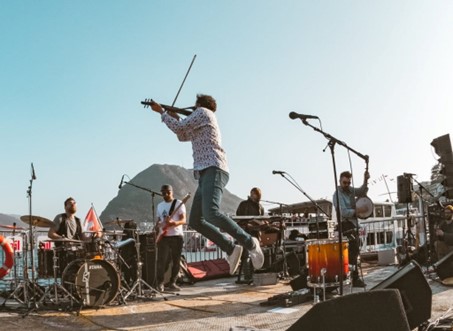
Fear of judgment
That is why it can be difficult to say about ourselves that we have talent, because we often have an internal criticism or fear of evaluating others – “You call it a talent?”. Talent is always too much to say, we think we have ability, and ability isn’t talent yet. Growing up in a school environment, you often hear about musical, artistic and sports talent, but is it said that someone has a talent for geography or biology? It has grown so culturally that disciplines that are strongly represented among successful people are disciplines that we find it easier to relate to as talents.
Meanwhile: talent = ability.
Talent is the thought, feeling and behavior that are most natural to us. These are predispositions and abilities to repeat something with equal or similar success. If someone recognizes patterns in numeric strings, he recognizes them every time, finds them in different number strings. If someone is a great cook, having different ingredients each time is able to create a good dish. If someone can put things into words, that is also a talent. It happens that, being a person who speaks very well, we are not able to record our thoughts in writing. This, however, does not rule out a talent for expressing oneself.
In everyday life, without careful observation of our own behavior, it is difficult for us to distinguish what we are good at. We learn our strengths based on the opinion of others and in most cases relying on it is related to our professional role. On the other hand, in everyday life, outside the work environment, without having someone around to give us feedback, we may not notice our abilities.
So how do you recognize talent?
The most famous talent research tool on the market is Gallup StrenghtsFinder, which is the basis for working with groups as well as with individuals. It measures the intensity of 34 traits that each of us has, but in a different configuration. These traits are the foundation for the further definition of talents. In other words, StrenghtsFinder gives a common language to name what we have and what makes us different. It’s important to remember that taking the test and getting the results is only the first step. Knowing and developing talents is not, contrary to appearances, an obvious and quick process. It requires mindfulness and a side view of yourself and your skills.
However, StrengthsFinder is not the only way to discover your talents. You can start the process of getting to know them by asking yourself a few questions and thus exploring the areas that are key to us.
Four areas worth considering to discover your talents:
- Of all the things you do well, list 2-3 which do you do best?
You need to think high and broad: take a look at all the things you do both at work and outside of it. Which of them do you do best and which are the easiest ones for you? Maybe you have the ability to organize great trips out of town with your friends? Furnishing the apartment? Sometimes it may seem illogical to gather together such seemingly distant fields and information, but a broad look at ourselves can lead us to interesting connections and unique value.

- What are you learning fast?
Some people grasp things faster than others – these skills are independent of our intellect. They can relate to sports, memorizing dance steps, as well as memorizing words, or catching complicated sequences of numbers in huge sets of numbers. Compare yourself to others, maybe being in a group you are the person who “caught” something faster than others? Again – these things may seem illogically related to what we do on a daily basis, but they are very much related to discovering talents.
- In what situation do you almost know the next steps to take?
This ability can arise during a difficult conversation – at some point you know how to play out the situation, you just feel what to do next. It may be that when explaining a thing or a concept to someone, you suddenly know how to simplify it and explain it step by step so that it is understandable. Or do you just see how to arrange a photo album to tell a story?
It’s not that someone once told you how to do something, it’s that the activity comes naturally to you.
- When looking for your talent, you can find a moment when we do something that we are passionate about and we are in the so-called flow – a state of deep concentration.
What activities do you enjoy so much that you forget about the passing of time? We enjoy doing tasks that are associated with the use of our talent – after completing an activity, we wonder when we will repeat it again. Hence the energy that makes it much easier for us to achieve success in the field that is based on our talent.
Why do we need knowledge about our talents?
If someone doesn’t need to learn more about their talents, there’s nothing wrong with that. This does not mean that he will not make good use of them, achieving his goals in various ways. Nevertheless, knowing about our talents improves our self-confidence and develops us enormously. This strengthens the effectiveness and ease of operation and adds positive energy. Such conscious action brings us closer to our own genius with each step.
During many years of working with talents, I have noticed that people who become aware of their abilities start to use talents more consciously – this leads to greater ease in modeling activities, and thus greater efficiency.
People who are aware of their talents show a higher level of self-esteem, a sense of agency, and thus greater self-confidence. As a result, it is also easy to perform tasks, and thus more energy. Often, being aware of what we are good at, we act with greater certainty and awareness. By appreciating ourselves more, we appreciate others and their talents, different from ours. Knowing our strengths enables us to acknowledge our areas of weakness without feeling guilty or judging ourselves, resulting in a more authentic state of being.
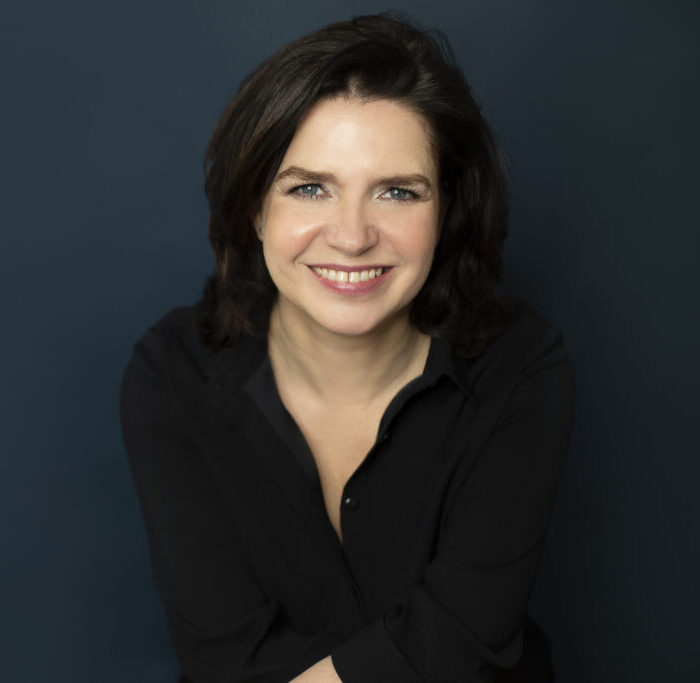
My name is Iwona Andrews. I help leaders and professionals discover and appreciate their talents so that they can navigate a direction of career, create their dream job and easier achieve what they want in both professional and private life.
I work with leaders to strengthen their leadership competences and develop in the role in harmony with oneself/remaining true to oneself. I also support people in understanding their behavioral style through DISC so that they can improve communication and relationships with others.
I have over 20 years of work experience, including managerial positions in various business areas, mainly in human resource management in Poland and in the UK in international organizations.
I work individually and in groups, in Polish and English.